
Proof of delivery is a critical part of delivery and service operations, yet it is often treated as an afterthought. It represents the confirmation that a delivery or service task has been completed as planned and accepted at its destination.
In practice, proof of delivery is where planning meets reality. Routes may be optimized and fleets well managed, but without reliable confirmation of completion, operations lack closure and accountability.
As delivery volumes grow and customer expectations increase, proof of delivery becomes essential for maintaining trust, visibility, and operational control. This article explains what proof of delivery is, why it matters, and how it supports reliable execution in real-world operations.
Proof of delivery, often referred to as POD, is the evidence that a delivery or service has been successfully completed. It confirms that the right item or service reached the right place, at the right time, and in the expected condition.
Traditionally, proof of delivery was captured using paper documents, signatures, or delivery notes. Today, it is increasingly handled digitally, using mobile devices to record confirmations in real time.
Proof of delivery can take many forms, including:
A digital signature
A timestamped confirmation
A photo or scan
Status updates recorded by the driver or technician
The purpose is not only to confirm completion, but to create a shared source of truth for planners, customers, and operations teams.
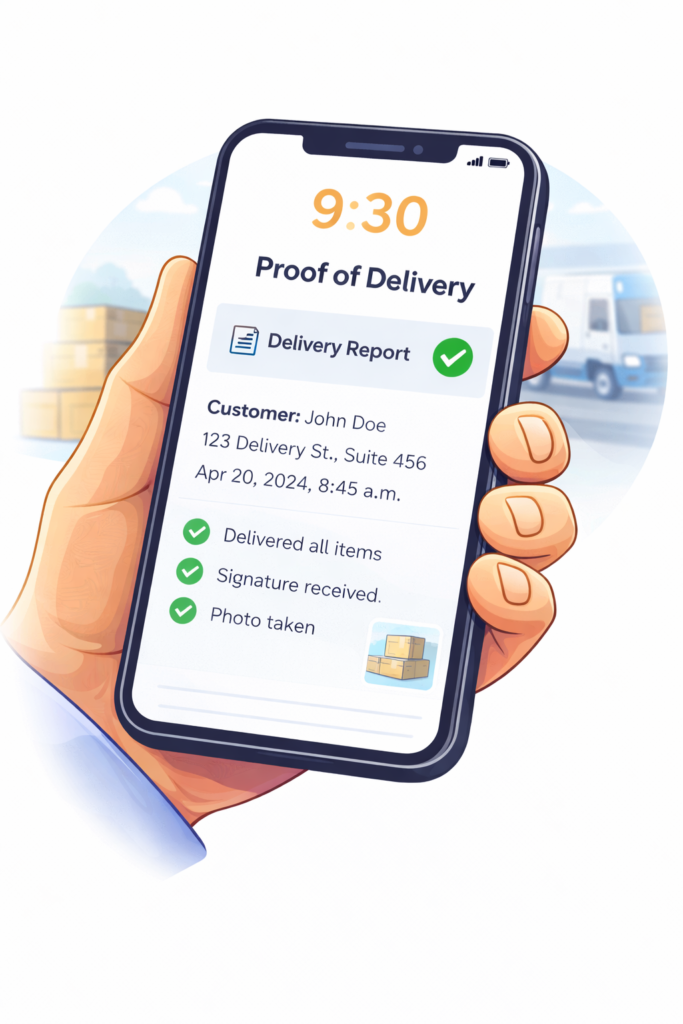
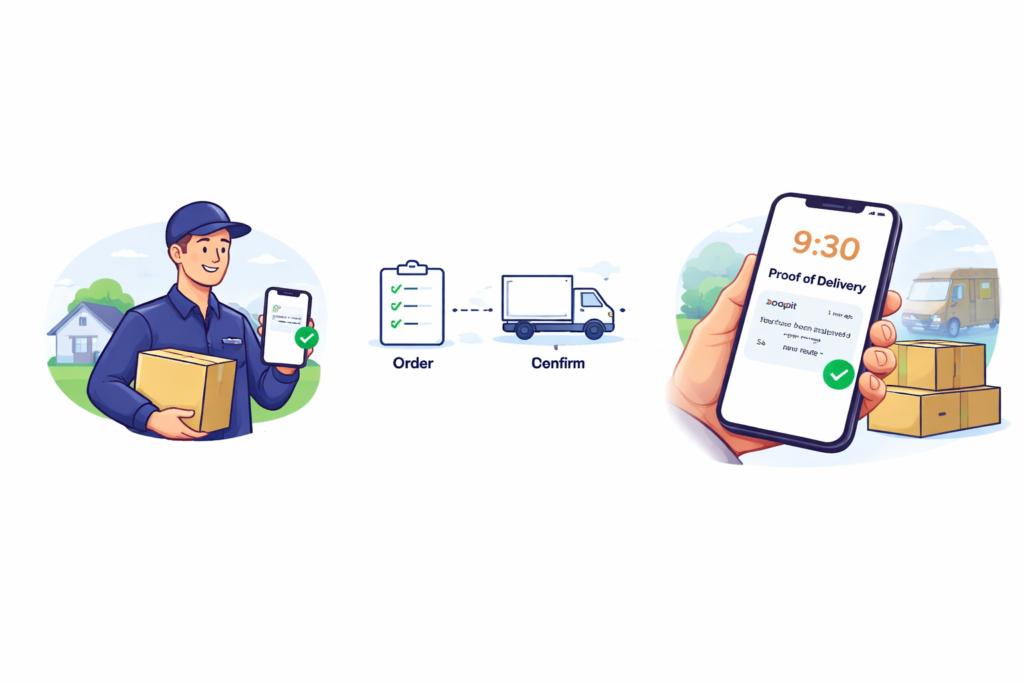
Proof of delivery sits at the final stage of the delivery workflow. After orders are planned, routes are executed, and vehicles and drivers complete their tasks, proof of delivery closes the loop.
Without this final confirmation, deliveries remain uncertain. Questions arise about whether tasks were completed, whether delays occurred, or whether issues need follow-up.
By capturing proof of delivery consistently, operations gain clarity about what actually happened in the field. This visibility is essential for reporting, billing, customer communication, and continuous improvement.
In small operations, proof of delivery is often informal. Drivers may confirm deliveries verbally, or issues are resolved through direct communication.
As operations grow, this approach no longer works.
More deliveries mean more handovers, more customers, and more potential points of failure. Without structured proof of delivery, planners spend time resolving disputes, answering customer questions, and reconstructing events after the fact.
Lack of reliable confirmation creates uncertainty, even when deliveries are completed correctly. Proof of delivery provides the structure needed to scale operations without losing control.
Effective proof of delivery depends on consistency and clarity. It should be easy for drivers or technicians to capture confirmation, and easy for planners and systems to access it.
An effective proof of delivery process typically requires:
Rather than adding friction, proof of delivery should support execution and reduce follow-up work. When designed well, it becomes a natural part of the delivery flow.
The value of proof of delivery goes beyond confirmation. When proof of delivery is reliable and consistent, operations become more transparent and predictable.
Drivers benefit from fewer disputes and clearer task completion. Planners gain confidence in execution data and spend less time investigating issues. Customers receive faster answers and more reliable communication.
From a business perspective, proof of delivery helps:
Reduce delivery disputes and claims
Improve customer trust and satisfaction
Support accurate billing and reporting
Create a foundation for performance analysis and improvement
It turns delivery completion from an assumption into a documented fact.
A common misconception is that proof of delivery is simply a checkbox at the end of a route. In reality, it is a key part of operational quality.
When proof of delivery is inconsistent or unreliable, it weakens the entire delivery process. When it is integrated and structured, it strengthens planning, execution, and follow-up.
Proof of delivery should support both accountability and learning, helping operations understand what works well and where improvements are needed.
Proof of delivery is valuable for many types of organizations. Delivery companies rely on it to confirm completion and manage customer expectations. Service and maintenance providers use it to document work performed on site. Retailers and distributors depend on it for accurate replenishment and dispute resolution.
Any operation that delivers goods or services directly to customers can benefit from a clear and reliable proof of delivery process.

📩 nora@zoopit.no
Or book an introduction here:
Talk directly with Nora to discuss how proof of delivery fits into your delivery operations.
An introduction is an opportunity to explore how structured execution and reliable confirmation can support more predictable and scalable operations.
Looking for more? Head back to our homepage to explore all of Zoopit’s logistics solutions, discover key features, and see how we can make your operations smarter.